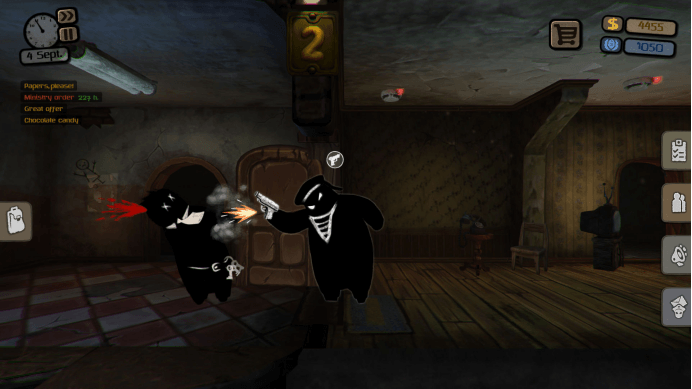
The cold wind in Pogoren in November was bone-chilling. I hid in a dilapidated apartment, listening to the gunshots of snipers outside the window and counting the last can. When Bruno proposed to rob the old couple next door, I stared at the hint on the screen that “they may not survive this winter” and felt the real physiological discomfort in the game for the first time.
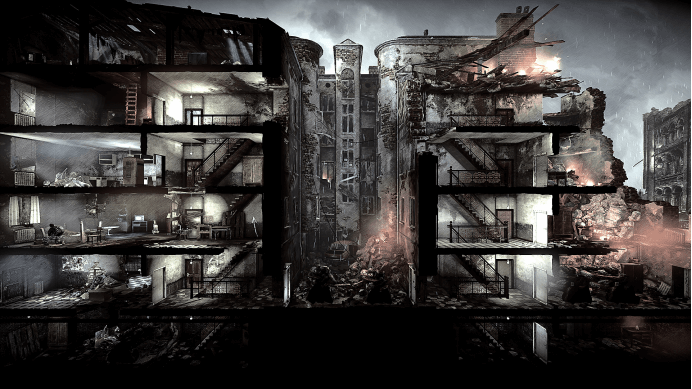
The game opens at the twilight of the raging war. The three survivors I controlled were crowded in the leaking attic. Mathematician Marko was looking for empty cans, the chef Bruno was repairing the leaking roof, and the journalist Katia was had a high fever. Before the first night comes, we must decide whether to risk going out to search for supplies, or to endure hunger and pray for tomorrow. When I chose to let Marco sneak into the abandoned school and watch him crawl back to the base surrounded by the scavengers, Katia questioned, “Is this the end you want?” I couldn’t sleep all night.
The cruelest choice happened on the fifteenth day. Katia’s disease requires antibiotics, and the only way to get it is to rob the hospital. When I controlled Bruno to enter the pediatric ward and looked at the children curled up in the hospital bed, the game gave two options: “take the medicine” or “leave empty-handed”. The mouse wandered between the two options for ten minutes. Finally, I chose to leave, and Katia stopped breathing at dusk the next day. Bruno wrote in his diary, “We didn’t become beasts after all.”
The real portrayal of the war in the game is suffocating. When Pavle was beaten and robbed of medicine by other survivors in the church, when Zlata was mentally broken because of witnessing violence, and when Marco cried late at night because of stealing the food of the elderly — these were not tasks, but the most real slices of the war. What shocked me most was that one snowy night, I asked Zlata to go to the barracks to trade. As a result, I witnessed the soldiers bullying civilians, and the game suddenly popped up the option: “intervene” or “bystander”. At that moment, I realized that in this city, even kindness needs a price.
As the winter deepens, the moral bottom line is constantly redefined. At first, we never stole civilian supplies. Later, we began to exchange firewood for medicine, and finally even considered robbing the barracks with weapons. When Bruno said “either plunder or die”, I suddenly laughed in front of the screen — it only took thirty days and nights of hunger to turn a normal person into a beast.
In the spring after customs clearance, I watched the only survivor in the ending picture sitting in the rebuilt apartment, which was written in the diary: “I survived, but I was dead that winter.” I suddenly understood the cruelest design of this game: it never judges your choice, but faithfully records how each decision turns you into another person.
If you also want to face the truest appearance of human nature, _This War of Mine_ will give you the most profound torture. But please remember that when the game is over, the real test has just begun — how will you face yourself recognized in the virtual war?