When I was licked by Cerberus for the first time in _Hades_, I suddenly realized that this ancient Greek mythology might be different from the version I read in my textbook. What I didn’t expect was that after experiencing forty-three deaths, I began to look forward to hearing Hades, the king of Hades, mocking in his deep voice, every time I returned to the Hall of the Underworld: “Dead again? My dear son.”
The game opens on the bank of the Ming River. I play Zagreus, the son of Hades, who is trying to escape from the underworld to meet his mother. But what really made this myth come to life were those Zeus who could text, Dionysus, who loved honey, and Charon, who complained about the workload all day long. Every time death returns, they will make fun of my failure in the tone of modern people, or share the latest gossip of Mount Olympus.
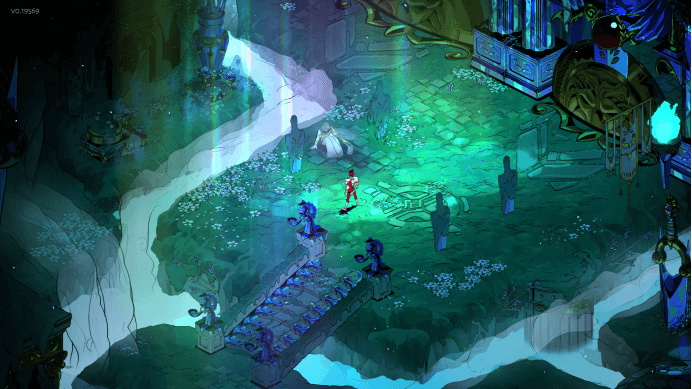
The most exquisite design lies in the subversion of death penalty. After each failure, not only will I not lose the progress, but I can unlock a new plot: reconcile with Megaera in the Hades Hall, talk to Sisyphus in the temple dormitory, and even help Orpheus find his lost love. I remember that when I defeated my father for the first time, he actually showed a trace of imperceptible pride — this moment was more touching than any artifact reward.
The game’s remodeling of mythical characters is textbook-level. Achilles is no longer the perfect hero in the textbook, but an instructor who gives up glory for love; Athena is no longer a high goddess of wisdom, but a sister who will worry about her brother; even the reason why Persephone returned to the underworld is also interpreted as boredom with family life. These gods suddenly become flesh and blood, jealous, confused and stupid.
As the number of escapes increased, I found myself starting to re-read myths from the perspective of the game. When I saw the legend of Hephaestus, what appeared in front of me was the lame craftsman who mocked himself by the furnace; when I read the story of Demeter, I thought of the agricultural goddess in the game who was depressed because her daughter left home. The most amazing thing is that these modern interpretations do not weaken the charm of myths, but give new vitality to those ancient stories.
On the weekend after customs clearance, I specially visited the Greek art exhibition. Standing in front of those mottled pottery jars, I suddenly felt that the portraits of the gods on them came to life — Zeus holding thunder and lightning might be on WeChat Moments, and Apollo, who played the harp, might be preparing for a tour. The greatest achievement of this game is that it turns ancient myths into contemporary stories that we can sympathetic to.
If you also feel that classical myths are out of reach, _Hades_ will give you the most vivid introductory lesson. It will not retell the legend boringly, but invites you to be a part of the myth. After all, when the gods are also worried about family conflicts, the distance between them and us may only be a happy escape from the underworld.